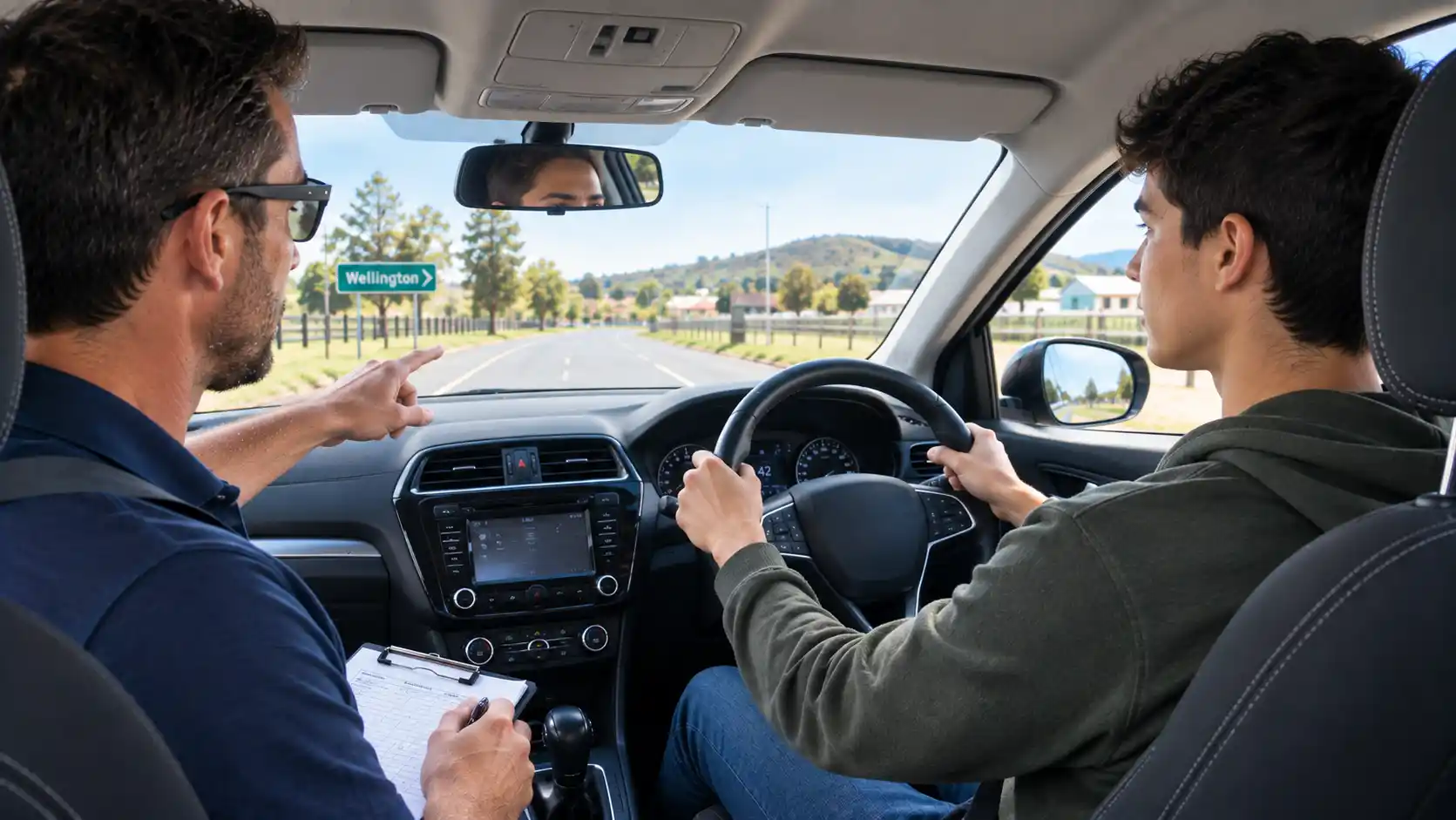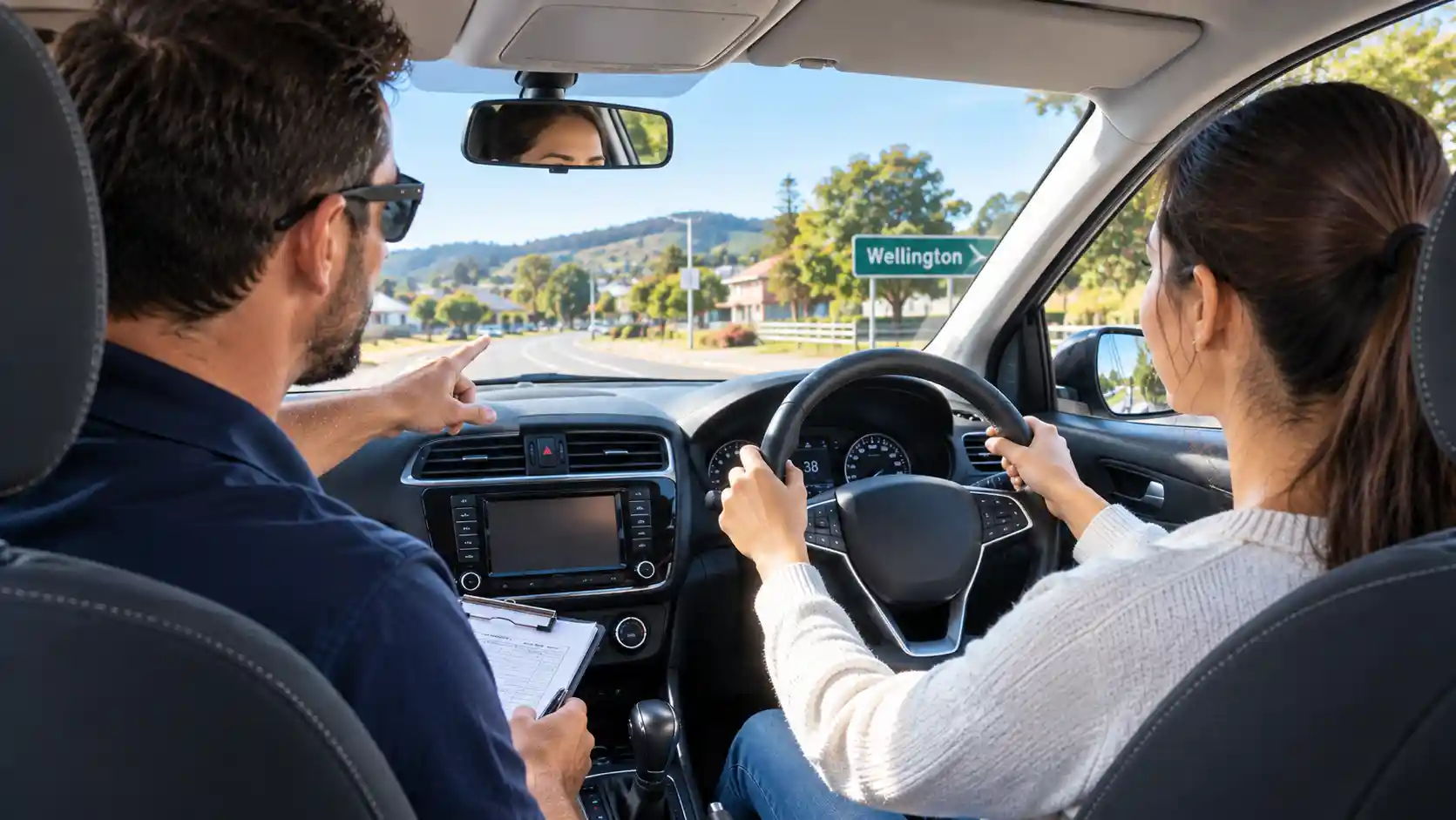
Getting ready for your driving test in Dubbo can feel uncertain if you do not know what to expect.
This guide breaks down the actual test routes, the roads you will likely drive on, and the key habits examiners look for so you can prepare with confidence and avoid common mistakes.
The Starting Point: Dubbo Service Centre
Your practical test begins and ends at the Dubbo Service Centre, 258-260 Macquarie Street, Dubbo NSW 2830. Phone: 13 77 88. If you’ve been taking driving lessons in Dubbo around this area, you’ll likely already be familiar with the common test routes and traffic conditions near the centre.
There are five test routes run from this centre. Each one covers approximately 12 to 13 kilometres and takes around 18 to 19 minutes to complete. You will not know which route you’re getting until you’re sitting in the car.
Service centre hours (always confirm directly with Service NSW before your visit, as hours can change):
| Day | Hours |
| Monday to Friday | 8:30 am to 5:00 pm (approx.) |
| Saturday | 8:30 am to 12:30 pm (approx.) |
| Sunday | Closed |
Selected mornings have a Quiet Hour, typically Tuesday and Thursday, from 10 am to 11 am, where phones are silenced, and voices are kept down. If nerves are a factor for you, a morning booking during this window can help.
The Roads That Show Up on the Test
Every route starts heading north from Macquarie Street. From there, the routes move through a consistent set of Dubbo streets before looping back. Knowing these roads before test day puts you significantly ahead.
Macquarie Street
You start here and return to it at least once. It is a busy main road with businesses, parked cars, and pedestrian movement. Mirror checks are not optional on this stretch.
Brisbane Street and Wingewarra Street
After a couple of roundabouts and a short section of Bultje Street, you move onto Brisbane Street heading toward Wingewarra Street. Local shops and cafes mean there is genuine foot traffic here. The roundabouts on this section come early in the route and set the tone for everything that follows.
Talbragar Street
This quieter road heads east toward Darling Street. It is a lane discipline and smooth-turning section. Examiners use quieter roads to check that you are not just reactive but actively aware.
Wheelers Lane
This is the longest single stretch on any Dubbo route, running approximately 3.4 kilometres across its full section with multiple roundabouts along the way.
It extends into residential Dubbo and requires sustained focus on speed management and positioning. More on this road below.
Fitzroy Street, Birch Avenue, and Hennessy Drive
These form the outer sections of the route. They are less trafficked but still require solid observation at intersections and roundabouts.
After Hennessy Drive, the route returns via Old Dubbo Road onto Macquarie Street, passing through Tamworth Street before looping back to the service centre.
The Real Problem with Dubbo Routes: Roundabouts
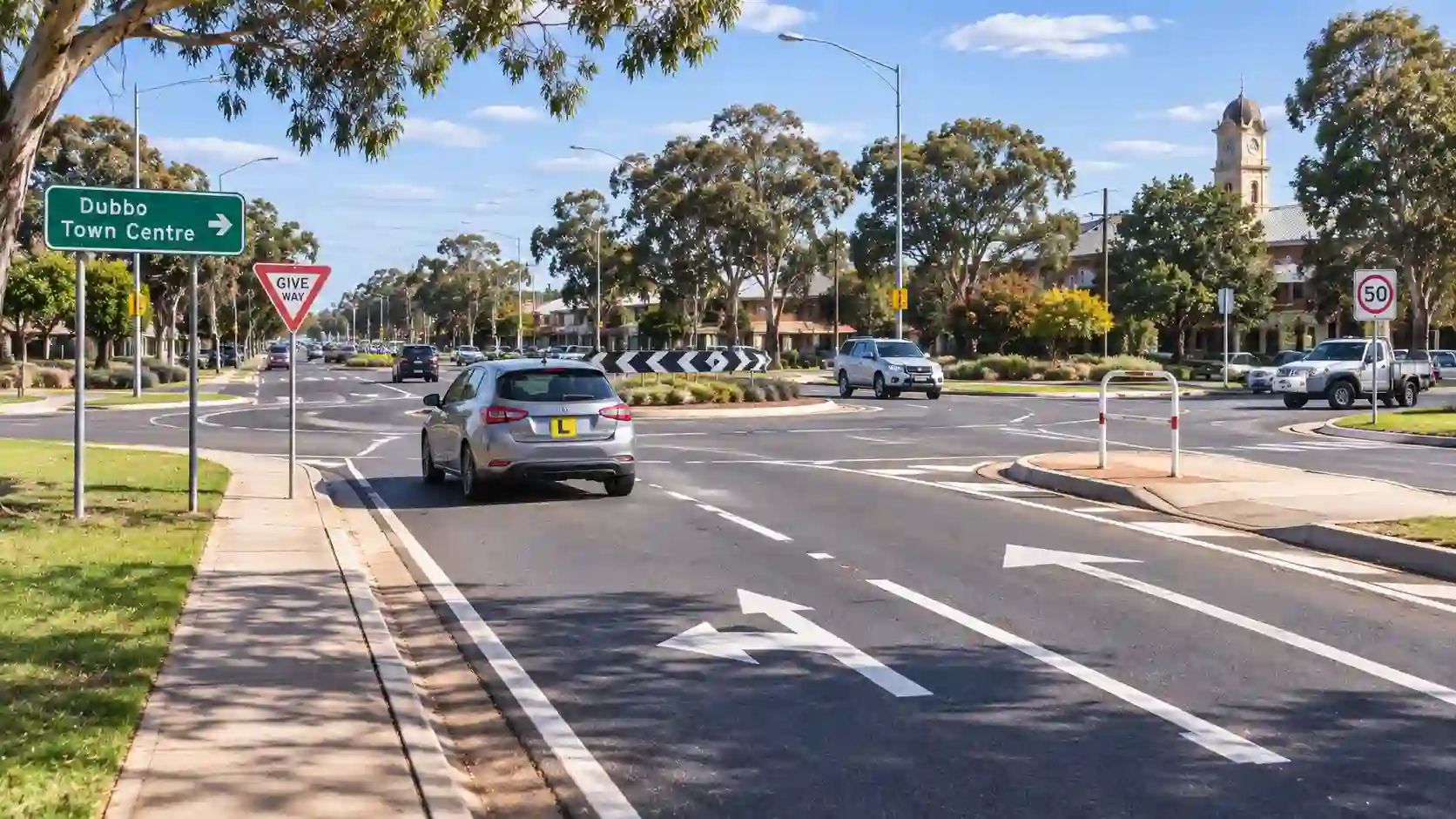
The Dubbo test routes are heavy on roundabouts. From Brisbane Street through to Wheelers Lane, you will navigate multiple roundabouts in a single test. For most candidates, this is where things fall apart.
On Australian driving forums, one of the most common reasons people report failing their NSW practical test is roundabout signalling. Candidates either forget to signal left when exiting, or they get rattled by another driver not indicating correctly and hesitate at the wrong moment.
The Transport for NSW rules on roundabouts are clear:
- Give way to all vehicles already in the roundabout
- Signal left when turning left on the approach
- No signal needed on entry if going straight, but signal left before you exit
- Signal right when turning right, then switch to left before your exit
Knowing the rules and applying them when you’re nervous and watching traffic are two very different things. The only fix is repetition.
| We Recommend: Practise Roundabout Exits Separately When you go out for a supervised practice drive, pick one roundabout and loop through it multiple times, focusing only on the exit signal. Do it until your left indicator goes on automatically every time you leave the roundabout, regardless of which direction you came from. On Wheelers Lane and Brisbane Street, especially, this habit needs to be locked in before test day. |
What the Examiner Is Actually Watching For
This is the part most guides skip over, but it matters more than anything else in this article.
Experienced drivers discussing NSW test failures on forums like Whirlpool consistently point to the same issue: candidates do not make their observations visible enough. An examiner cannot see inside your head. If your mirror checks are subtle glances or your head turns are minimal, the examiner marks them as not performed.
The advice from drivers who have been through multiple attempts is consistent: your head needs to actually move. Mirror checks, blind spot checks, and head checks before changing position all need to be deliberate and obvious, not a flick of the eye.
The correct sequence for any lane change or position shift is: mirrors, indicate, head check, then move. And the head check must happen just before the move, not a few seconds earlier when the gap might have already changed.
| We Recommend: Make Your Checks Visible During every practice drive, narrate what you are checking out loud. “Checking rear mirror, checking side mirror, blind spot check.” It sounds awkward, but it trains you to make the movements deliberate and timed correctly. By test day, the physical habit is there even if you stop talking. Examiners need to see your head move. Give them something clear to mark. |
Before You Can Book: The Requirements You Cannot Skip
You cannot sit the practical driving test in NSW until you have:
If you are still working through the earlier stages, our guide on getting your licence in Dubbo covers everything from your learner’s licence through to booking your practical test.
- A current NSW learner’s licence
- If you are under 25: at least 120 logged hours of supervised driving, including 20 hours of night driving. If you are 25 or older, you are not required to log hours, though supervised practice is still strongly recommended before sitting the test.
- Passing the Hazard Perception Test (HPT)
- Submitted your digital logbook hours before your test if you have been using the Roundtrip app (the only digital logbook currently accepted by Transport for NSW)
That last point catches people every year. Do not submit your hours the night before.
| We Recommend: Check Your Logbook Hours Two Weeks Out Count your logged hours at least two weeks before your intended test date, not the week of. If you are short on night hours, two weeks give you time to fix it. Submitting late or discovering you are under 120 hours, 48 hours out means cancelling your booking and waiting again. |
If Your Preferred Date Is Not Available
Booking waits at the Dubbo Service Centre can run longer than expected. The nearest alternative service centres for a practical test are in Wellington (46 km away), Mudgee (100 km), and Parkes (106 km). If your test date matters more than your location, it is worth checking availability at these centres through the Service NSW booking system at Service NSW.
How to Prepare for the Dubbo Routes
Reading this article is not preparation. Driving the roads is.
Before your test, take a supervised practice drive along Macquarie Street, through the Brisbane Street and Wingewarra Street roundabouts, and the full length of Wheelers Lane. Do it more than once, and do it in morning traffic, because that is when your test will most likely be scheduled.
Focus specifically on three things:
- Roundabout exit signals on every roundabout, every time
- Deliberate, visible head checks before every position change
- Smooth speed management on Wheelers Lane, where 2.5 kilometres of consistent driving tells the examiner a lot about your control
| We Recommend: Do a Dry Run of the Service Centre In the week before your test, drive to 258-260 Macquarie Street and park nearby. Know where you are going so that on test day, you are not arriving stressed or late because you could not find parking. A calm start to the morning makes a real difference to how you handle the first few minutes in the car. |
The practical test in Dubbo is not designed to trick you. But it will expose preparation gaps very quickly. If you have driven these streets enough times that Wheelers Lane feels familiar and your roundabout signals are automatic, you are ready.
If you have not, go drive them again first.
Frequently Asked Questions
Does the Dubbo Service Centre provide a car for the driving test?
No. Service NSW does not supply a vehicle at any test centre in NSW, including Dubbo. You need to bring your own registered and roadworthy car, or arrange to use a driving instructor’s vehicle for the test.
How long do I have to wait if I fail the Dubbo driving test?
You must wait at least 7 days before rebooking, and you pay the full test fee again each time. The examiner will give you a written score sheet explaining exactly where you lost marks, so use that as your preparation guide before the next attempt.
Can someone come with me to the Dubbo Service Centre on test day?
Yes, and in fact, you must bring someone who holds a full Australian driver’s licence, because if you fail, you cannot drive yourself home. That person waits inside while the test happens. Only you and the testing officer are permitted in the vehicle during the test itself.