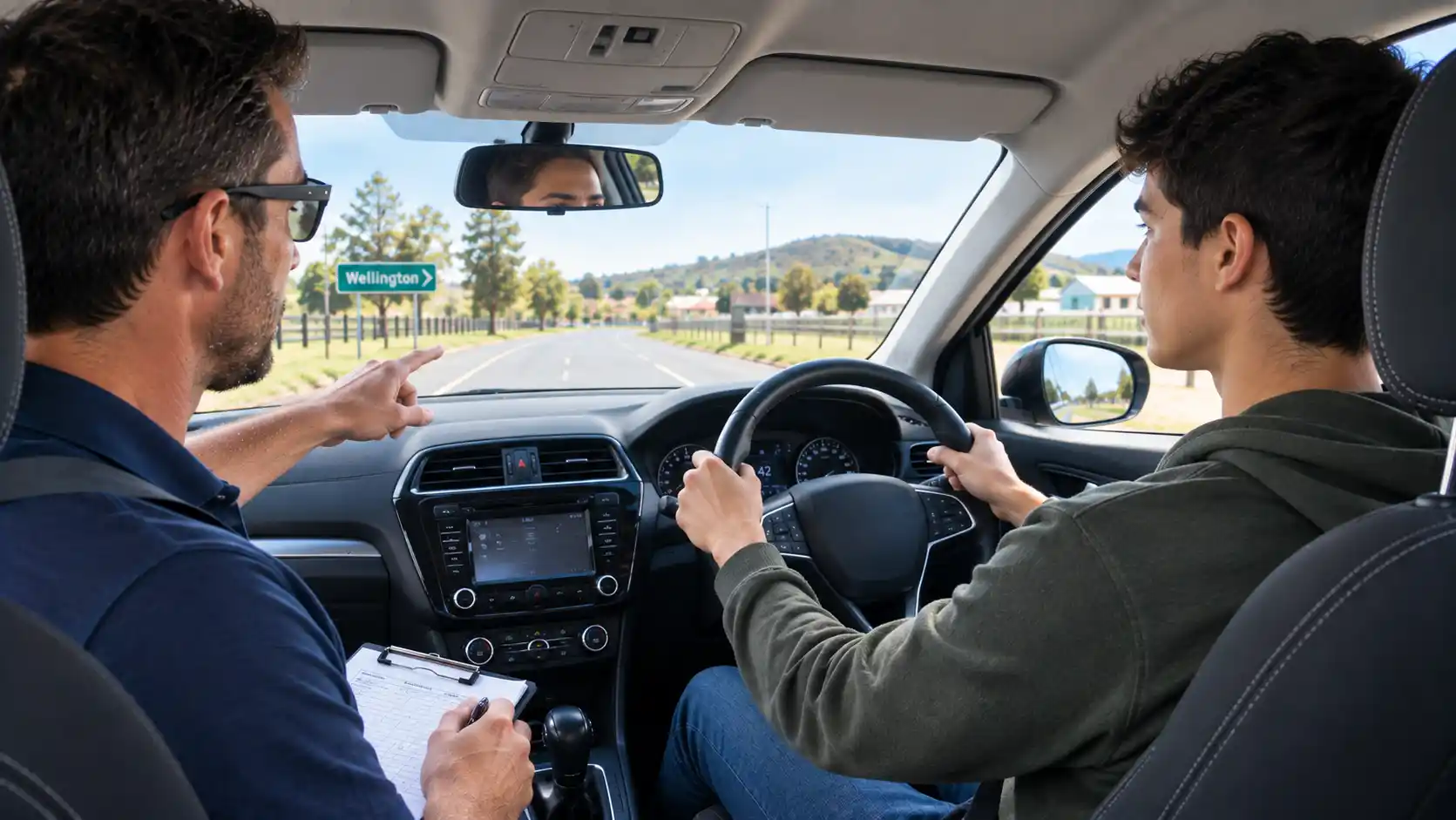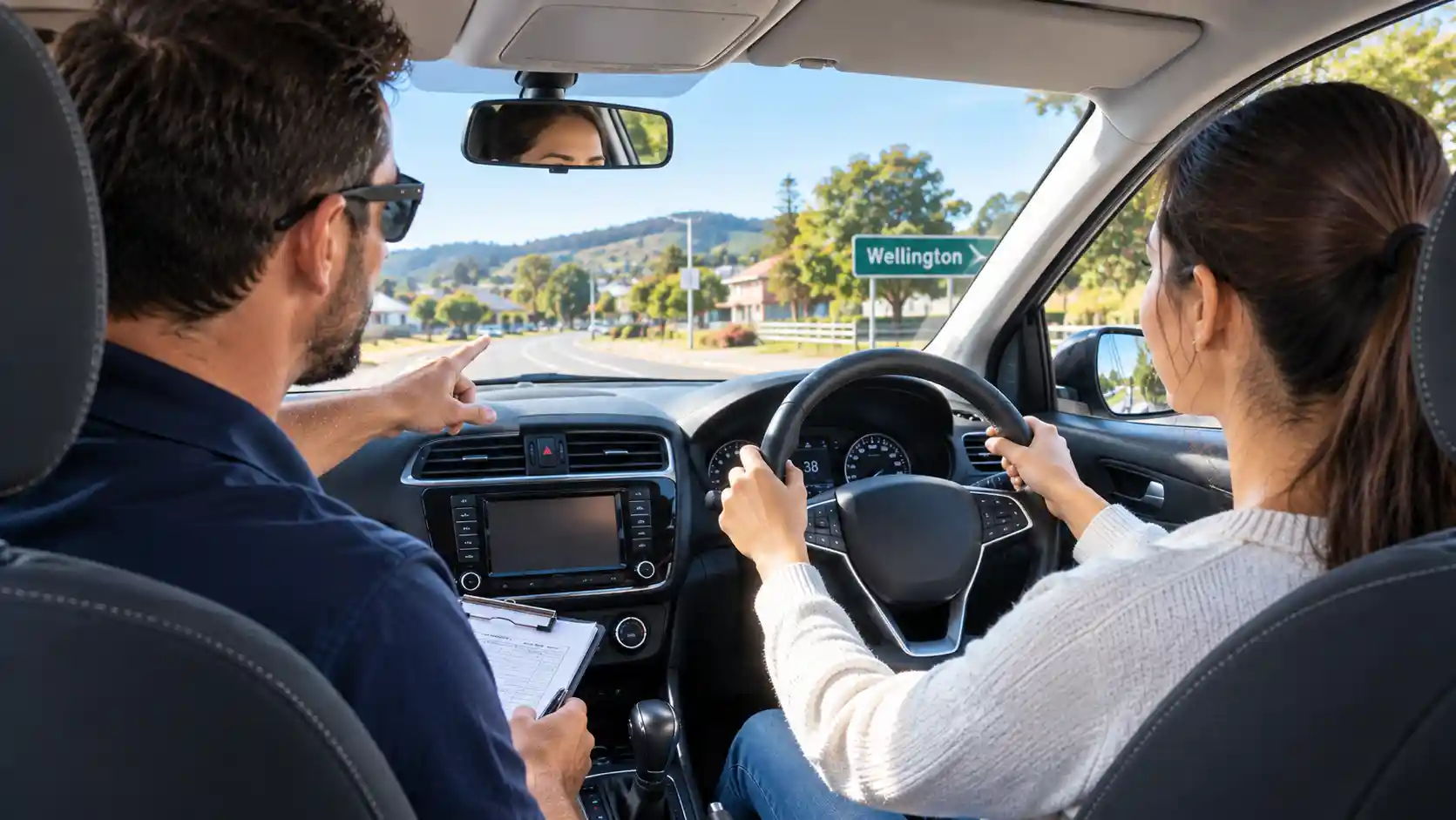
Getting your P plates is a big milestone, especially in a regional city like Dubbo where having a licence genuinely changes what you can do and where you can go. But the driving test catches more people off guard than they expect. The roads feel different when there is an examiner in the passenger seat with a clipboard.
This guide covers the specific mistakes that cause failures in Dubbo, and the tips that experienced local instructors know actually work on test day at Macquarie Street.
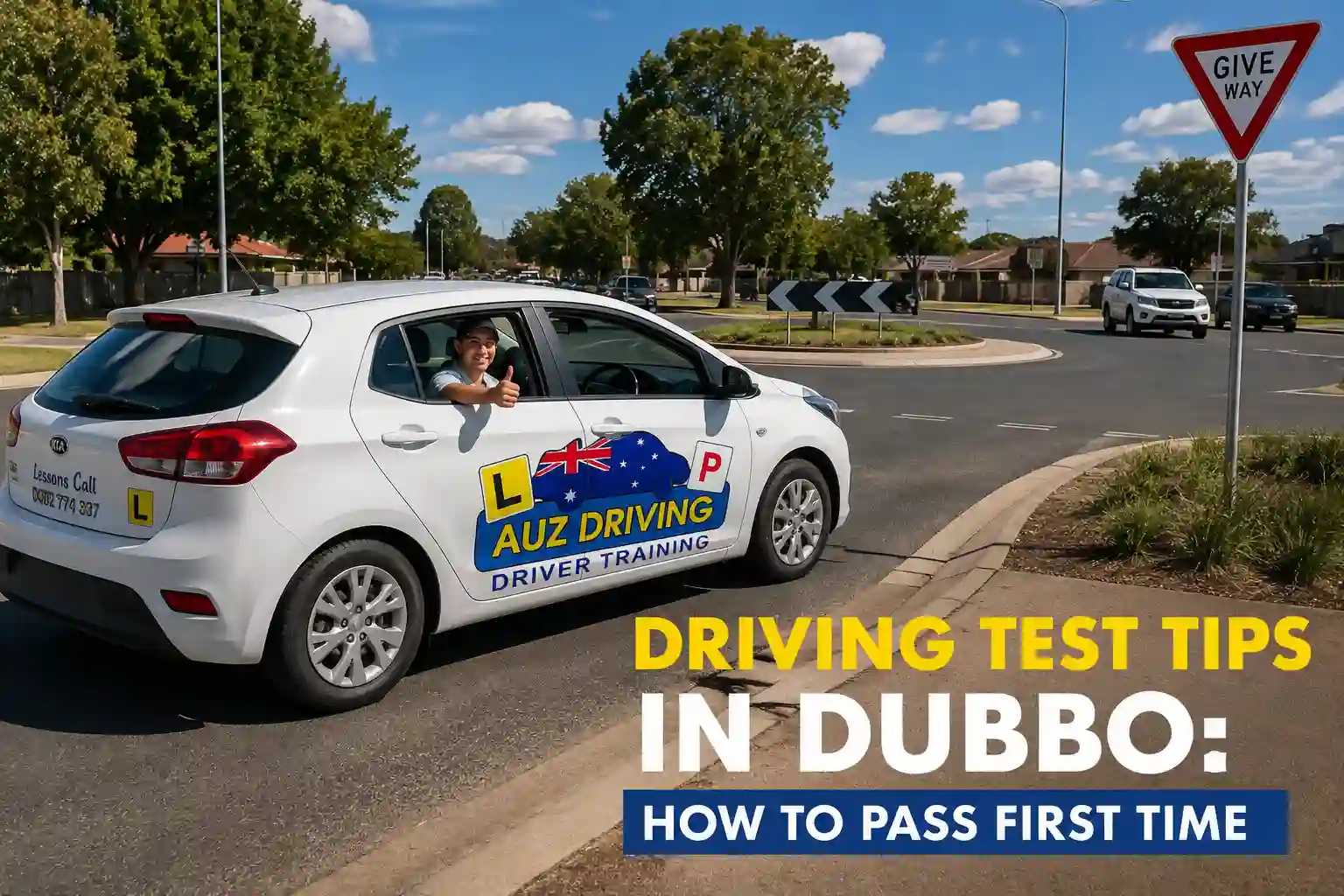
How Many Learners Fail the NSW Driving Test?
Failing a driving test is more common than most people think. In New South Wales, the first-attempt pass rate sits at around 56%, which means roughly 44% of learners do not pass on their first try according to Service NSW data.
In regional centres like Dubbo, nerves tend to be a bigger factor than in metro areas because many learners have done most of their supervised driving in familiar streets with family rather than building experience across a full range of conditions.
What Happens if You Fail the Dubbo Driving Test?
If you do not pass your driving test, the examiner gives you a written report listing every fault recorded during the assessment. There is no penalty for failing and no limit on how many times you can resit. Most learners who do not pass on their first attempt do pass on their second attempt, particularly when they target the specific areas the examiner flagged.
You can rebook your test at the Dubbo Service NSW Centre once you feel ready. There is no mandatory waiting period between attempts in NSW beyond the standard booking availability.
Common Mistakes Dubbo Learners Make on Test Day
The examiner is not looking for perfection. They are assessing whether you can drive safely and independently. Most failures come down to the same predictable errors, all of which can be corrected before your next attempt.
Mistake 1: Poor Observation Checks
The most common cause of driving test failure in NSW is poor observation. The examiner records how often you check your mirrors, whether you perform blind spot checks before lane changes, and whether your head checks are real or just a quick nod.
Check your mirrors every 5 to 8 seconds throughout the test, not just when you are about to do something. Blind spot checks are required every time the vehicle moves sideways. If observation feels like something you have to remind yourself to do, practise until it is automatic.
Mistake 2: Rolling Through Stop Signs
A complete stop means wheels fully stopped, before the line. Slowing to a crawl while looking and then rolling through is still a fault. Examiners record this every time, and in Dubbo’s CBD streets there are several stop signs on routes that commonly appear in tests.
Practise bringing the car to a full, deliberate stop at every stop sign during your lessons. It only takes a moment and it is an easy fault to eliminate completely before test day.
Mistake 3: Speed Management Errors
Dubbo has multiple speed zones along the test routes: 40 km/h school zones near the CBD, 50 km/h in residential streets, and 60 km/h on arterial roads including Macquarie Street. Missing a speed limit sign or driving 5 to 10 km/h under the limit out of nerves both attract faults.
Check your speedometer regularly and settle your speed rather than hovering between numbers. Know the school zone times and locations near the Macquarie Street test centre so you are not caught off guard.
Mistake 4: Missing Indicators
Failing to signal is one of the most consistently recorded faults on NSW driving tests. Indicators are required when turning, changing lanes, pulling away from a kerb, and leaving a roundabout. A single missed indicator is a fault. Multiple missed indicators cause failure.
The two moments Dubbo learners miss most often are leaving the roundabout on Wingewarra Street and pulling back into traffic on Macquarie Street when returning to the test centre. Make indicating a reflex in every practice session.
Mistake 5: Hesitation and Poor Situational Judgement
Holding up traffic when a safe gap is available is a fault, the same as pulling into an unsafe gap. Examiners want to see confident, timely decisions: if it is safe to go, go; if it is not safe, wait clearly and decisively.
On busy sections of Macquarie Street and Cobra Street, gaps in traffic move quickly. Practise reading them during lessons in real traffic so that your judgement is calibrated before the test rather than being tested for the first time on the day.
Mistake 6: Parking Errors
Reverse parallel parking is assessed on almost every Dubbo driving test. The examiner will ask you to park in a marked bay or between two cones. Mounting the kerb, leaving the car at an angle into traffic, or taking more than two or three adjustments all attract faults.
Practise parallel parking until you can consistently park within a space 1.5 times the length of your car. One smooth adjustment during the test is accepted; panic reversing is not.
Mistake 7: Poor Lane Position and Vehicle Control
Drifting toward the centre line, cutting left-turn corners in Dubbo’s grid streets, and weaving within a lane all accumulate as faults over the course of the test. Examiners look for a stable, centred driving position from the first street.
Left turns are where most Dubbo learners drift wide and briefly cross into the opposing lane. On Cobra Street and Brisbane Street, where parked cars line one side, maintain a centred position without swerving toward the centre line.
Mistake 8: Vehicle Not Ready for the Test
The examiner checks the test vehicle before the road component begins. If the car is not roadworthy, the test does not proceed and the fee is not refunded.
Before your test, check all lights including indicators and brake lights, confirm L plates are displayed front and rear, check tyres are properly inflated, and make sure the vehicle is registered and insured. If you do not have access to a suitable car, car hire for the driving test in a dual-controlled vehicle is available.
Driving Test Tips in Dubbo: What Actually Works
These tips are specific to the Macquarie Street test conditions and what local instructors in Dubbo know from preparing students for this test centre.
Tip 1: Practise the Real Dubbo Test Routes
The Dubbo driving test uses roads around Macquarie Street, Wingewarra Street, Cobra Street, Brisbane Street, and residential streets in the surrounding CBD grid. Drive these roads in real traffic, at times of day similar to your test booking, before your test date.
Familiarity with the route removes one layer of uncertainty on test day and lets you focus on technique rather than navigation. Ask your instructor to run you through the most common test route sequences in your final lesson.
Tip 2: Build Observation Into Every Drive
Good observation is not something you can fake on test day. It has to be a habit built over many practice sessions. Every time you move the car: mirrors, signal, head check, then move.
Practise this sequence so consistently during lessons and private practice that it becomes automatic. If you have to consciously remind yourself to check mirrors during the test, it is not yet a habit.
Tip 3: Know the NSW Road Rules, Not Just the General Ones
Study the specific NSW road rules that apply to the areas you will drive during your test. Know the default speed limits for different street types, the give-way rules at roundabouts and uncontrolled intersections, the hours school zones operate, and what is required at pedestrian crossings.
The NSW Road Users’ Handbook covers all of this and is available free online. Reading it once through in the week before your test is time well spent.
Tip 4: Do a Dedicated Pre-Test Lesson
A lesson specifically focused on the Dubbo test routes and conditions, run by a local instructor who knows what the examiner looks for, is the highest-value preparation you can do in the final days before your test.
Book a pre-test driving lesson in Dubbo with Auz Driving School. Your instructor will take you through the actual route, run a mock test, and give you specific feedback on anything still likely to cause a fault.
Tip 5: Check Your Logbook Is Complete
Confirm your NSW learner driver logbook shows a minimum of 120 hours of supervised driving, including at least 20 hours at night, before booking your test. If you completed the Safer Drivers Course, that reduces the requirement to 100 hours.
Every entry must be signed by an eligible supervising driver. The examiner checks the logbook at the test centre before the road component begins. A logbook that does not meet the requirements means the test does not proceed.
Tip 6: Use a Car You Have Driven Before
Sitting your driving test in a car you have only driven once or twice creates an unnecessary disadvantage. Controls feel slightly different between vehicles, and unfamiliarity under pressure leads to small hesitations that accumulate as faults.
Tip 7: Arrive Early and Stay Calm
Arrive at 258-260 Macquarie Street at least 15 minutes before your test time. Rushing in with two minutes to spare raises your stress level before you even get in the car.
Nerves are normal and examiners expect them. What they are assessing is whether you drive safely overall, not whether you appear completely relaxed. One or two minor faults do not end the test. Focus on the next street ahead rather than mentally replaying what just happened.
Get Ready for Your Dubbo Driving Test with Auz Driving School
The most effective thing you can do before your test is get on the real Dubbo test roads with an instructor who knows what the examiner will check at the Macquarie Street Service NSW Centre.
Auz Driving School is based at 172 Gipps Street, Dubbo NSW 2830, and covers all areas across Dubbo and Central Western NSW, including Wongarbon, Geurie, Wellington, and Tomingley. We offer lessons seven days a week, including pre-test sessions, and car hire for test day.