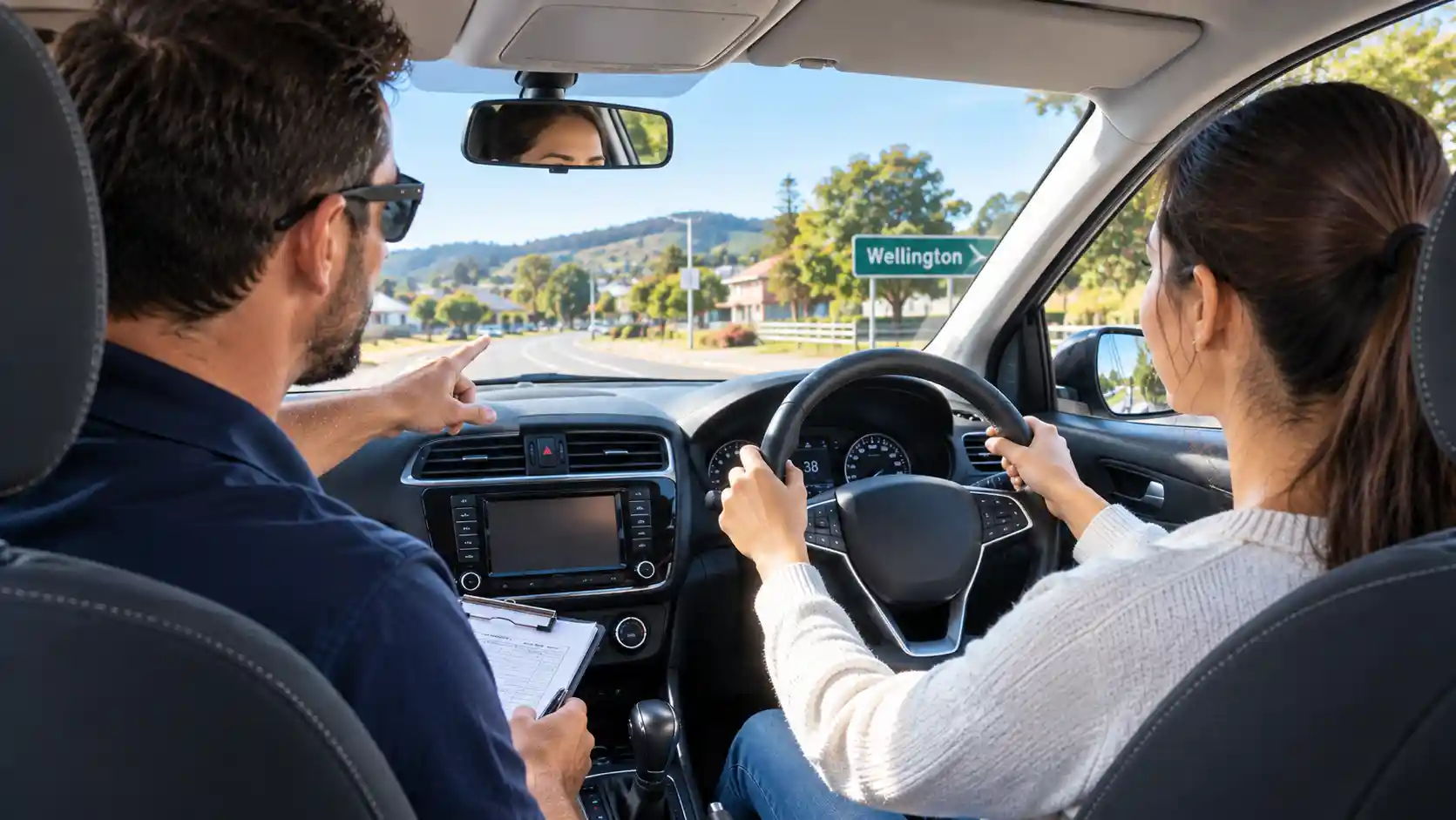
Getting your licence in Wellington follows the same process as anywhere else in NSW, but knowing exactly what’s coming at each stage makes the whole thing far less daunting. There are four main hurdles: the Driver Knowledge Test, holding your learner licence while logging supervised hours, the Hazard Perception Test, and finally the practical driving test. If you’re under 25, supervised hours are compulsory along the way. If you’re 25 or older, several of these requirements ease considerably.
Here’s exactly what each stage involves, and the details that genuinely trip people up.
Passing the Driver Knowledge Test
The Driver Knowledge Test is your entry point, and you can’t apply for a learner licence without it. You need to be at least 16 to sit it.
Before you book, you’ll need:
- To be 16 or older
- Proof of identity documents totalling at least 100 points
- An eyesight check at the service centre
- The test fee, check the Service NSW fees page for the current amount, since it does change
The DKT itself is computer-based and covers road rules, signs and safe driving behaviour, split into two sections. The general knowledge section has 15 questions and you need 12 correct. The road safety section has 30 questions and you need 29 correct, both sections have to be passed individually, a strong overall score doesn’t help you if you fall short on one section specifically. The test can end early if you get too many wrong in either section, so you won’t always see all 45 questions.
You can sit the DKT online through an interactive course, which takes roughly four to six hours to complete before you’re eligible to test, or book an in-person session at the Wellington Service Centre on Warne Street. The online path lets you retry as many times as needed for a single fee. In-person attempts require a new fee each time you sit it.
Study the official NSW Road User’s Handbook properly before you sit it. Every DKT question is drawn directly from that content, so it’s genuinely the most efficient use of your prep time.
Getting Your Learner Licence
Once you’ve passed the DKT, head to the Wellington Service Centre at 46 Warne Street to apply for your learner licence. If you did the DKT online, you’ll still need to attend in person for your identity check and eyesight test.
At the service centre, your identity documents get verified, your eyes are checked against the NSW fitness-to-drive standard, you pay the learner licence fee, your photo is taken, and you’re issued a paper logbook.
Your learner licence is valid for five years. You need to carry it whenever you drive and display L plates front and rear on whatever car you’re practising in. As a learner, you can only drive with a fully licensed Australian supervising driver seated beside you, and there’s a zero alcohol limit for learner drivers in NSW, no exceptions.
Building Your Supervised Driving Hours
This is where the bulk of your actual skill development happens. Over your practice hours, you’ll want genuine exposure to:
- Starting, stopping and smooth braking
- Steering and lane positioning
- Mirror checks and head checks for blind spots
- Roundabouts and give-way intersections
- School zones and speed limit transitions
- Parallel parking and reverse manoeuvres
- Busy intersections and multi-lane roads
- Country road driving and higher-speed conditions
If you’re under 25, you need to hold your learner licence for at least 12 months and complete 120 hours of supervised driving before you’re eligible to sit your driving test, with at least 20 of those hours at night.
If you’re 25 or older, none of this applies. There’s no logbook requirement and no minimum holding period. Once you’ve passed the Hazard Perception Test, you can book your driving test as soon as you feel genuinely ready, there’s no fixed waiting period to clear first. That said, feeling ready and being ready aren’t automatically the same thing, so it’s still worth getting proper practice in rather than booking the moment you’re technically eligible.
A few things that make a real difference to how useful your logged hours actually are:
Record each drive on the day it happens. Filling in the logbook from memory a few days later is when errors creep in, and those errors can cost you hours at the worst possible time.
If you’d rather log digitally, Roundtrip is currently the only logbook app accepted by Transport for NSW. Submit your hours through the app at least 48 hours before your driving test, leaving it later can cause processing issues.
Keep a paper logbook somewhere safe if that’s what you’re using. A replacement costs $18 at a service centre if you lose it, which is an annoying but avoidable cost.
Spread your hours across different times, weather and traffic conditions rather than rushing to fill them in the weeks before your test. A learner with 120 rushed hours in similar conditions is generally less prepared than one with 120 hours spread across genuinely varied situations.
Once you’ve logged 50 actual hours, not counting any bonus hours from professional lessons, you become eligible for the Safer Drivers Course. It’s a government-backed program that earns you 20 bonus logbook hours and teaches hazard management specifically. It runs in two parts: a three-hour group discussion session, and a separate two-hour in-vehicle coaching session with another learner and a qualified coach. Both modules need to be completed to receive the bonus hours, and it’s worth booking well before your 120 hours are nearly done so it genuinely counts toward your total rather than being an afterthought.
Professional lessons also come with a practical advantage worth knowing about: hours with a qualified instructor count triple toward your logbook total under the 3-for-1 scheme, up to the scheme’s cap. Structured driving lessons in Wellington combine that benefit with genuine, targeted skill-building rather than just accumulating time behind the wheel.
Passing the Hazard Perception Test
The HPT is a separate, computer-based touchscreen test sat at a service centre. You’ll watch 15 short video clips filmed from a driver’s perspective and tap the screen at the exact moment you’d respond to a developing hazard, braking, slowing, or preparing to turn.
If you’re under 25, you can book the HPT once you’ve held your learner licence for at least 10 months. If you’re 25 or older, you can book it any time after getting your learner licence, no waiting period applies.
To prepare properly, use the free official HPT practice tools on the Transport for NSW website, the scenarios genuinely reflect what you’ll see in the real test. Timing matters more than most learners expect, the test isn’t just checking whether you noticed a hazard, it’s scoring whether you responded at the right moment, not too early and not too late. Actively scanning for hazards during your ordinary supervised driving practice, rather than just during dedicated study sessions, is what actually builds the instinct the HPT is designed to measure.
Booking and Sitting Your Practical Driving Test
Once you’ve passed the HPT and, if it applies to you, met your logbook requirements, you can book your practical test through Service NSW. Testing at the Wellington Service Centre runs by appointment.
The test itself runs roughly 30 to 45 minutes across a series of assessment zones, with a testing officer directing your route and scoring your performance throughout. You’ll be assessed on speed management and following distance, road positioning and lane discipline, decision-making at intersections and roundabouts, your response to developing hazards, vehicle control including smooth braking and steering, parking, and observation through mirror and head checks.
To pass, you need at least 90 per cent overall with zero fail items, both conditions apply together. The full detail on what counts as a fail item is set out in Transport for NSW’s official Guide to the Driving Test, which is genuinely worth reading before your test rather than relying on secondhand summaries. If you don’t pass, you’ll need to wait at least seven days before rebooking. Our guide on how to book a driver or rider licence test in NSW walks through the booking process itself in more detail, and our separate Wellington driving test tips guide covers local test routes and how to prepare for the day specifically.
Why Structured Lessons Genuinely Help
Self-practice with a family member and structured lessons with an instructor do different jobs, and most learners who pass on their first attempt have done both.
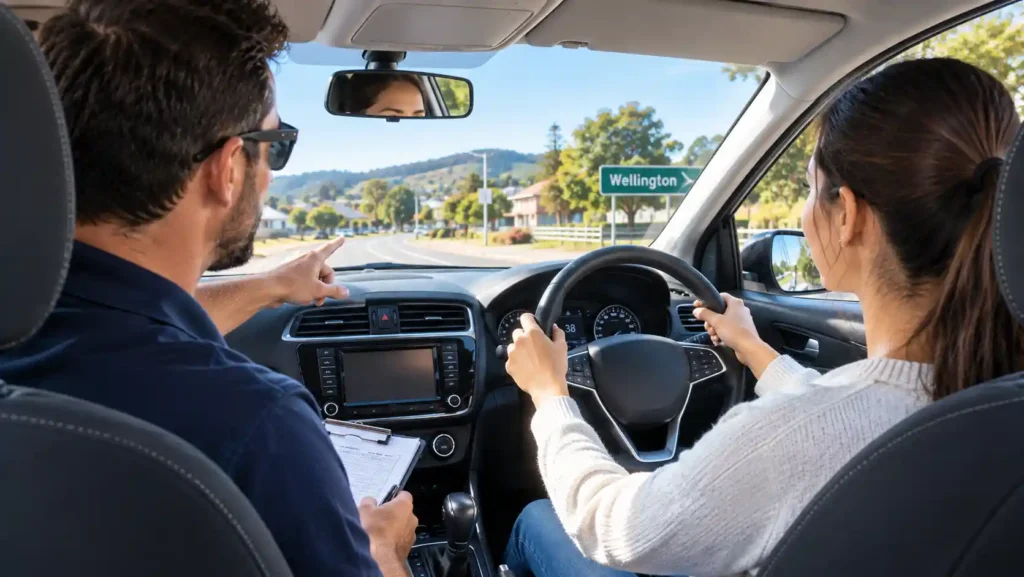
An instructor catches unsafe habits early, before they’ve had time to become automatic and hard to unlearn. They give direct feedback after specific situations rather than general encouragement, run mock tests that actually replicate test conditions, and in Wellington’s case, bring genuine familiarity with the roads, school zones and roundabouts your test route is likely to draw from.
That local knowledge matters more than it might seem. Nothing on test day feels unfamiliar when you’ve already driven the actual roads repeatedly with someone who knows exactly what the test is looking for.
Frequently Asked Questions
What happens if I fail the DKT?
You can retake it. If you sat the online version, your original fee covers unlimited retries. If you sat in person, you’ll need to pay the fee again for each attempt, which makes the online path worth considering if you’re not fully confident going in.
Can I do the DKT or driving test with an interpreter if English isn’t my first language?
Transport for NSW offers the DKT in a number of languages other than English, and interpreter arrangements exist for parts of the process. Check current language options and interpreter availability directly with Transport for NSW or your local service centre before booking, since this varies by test type and location.
Is a digital learner licence accepted in NSW, or do I need the physical card?
NSW does offer a digital driver licence option through the Service NSW app for eligible licence holders. Our complete guide to learner, provisional and digital licences in NSW covers what’s currently accepted and how to set it up.
What if I already hold a licence from another state or country?
If you’re moving to Wellington with an existing licence from another Australian state or from overseas, you may not need to start from the DKT at all. Our guide on converting an interstate or overseas driver licence in NSW covers which pathway applies to you.