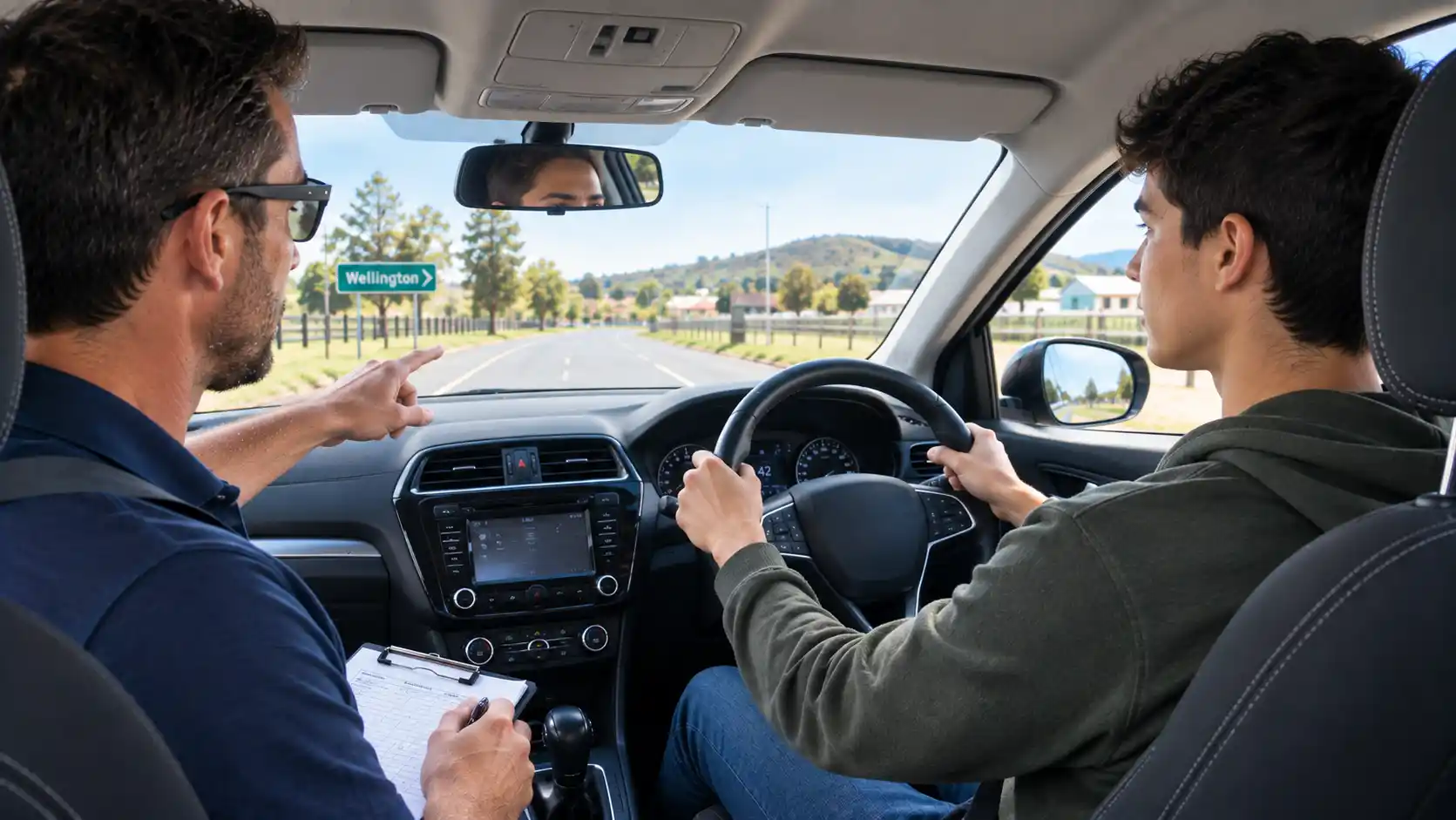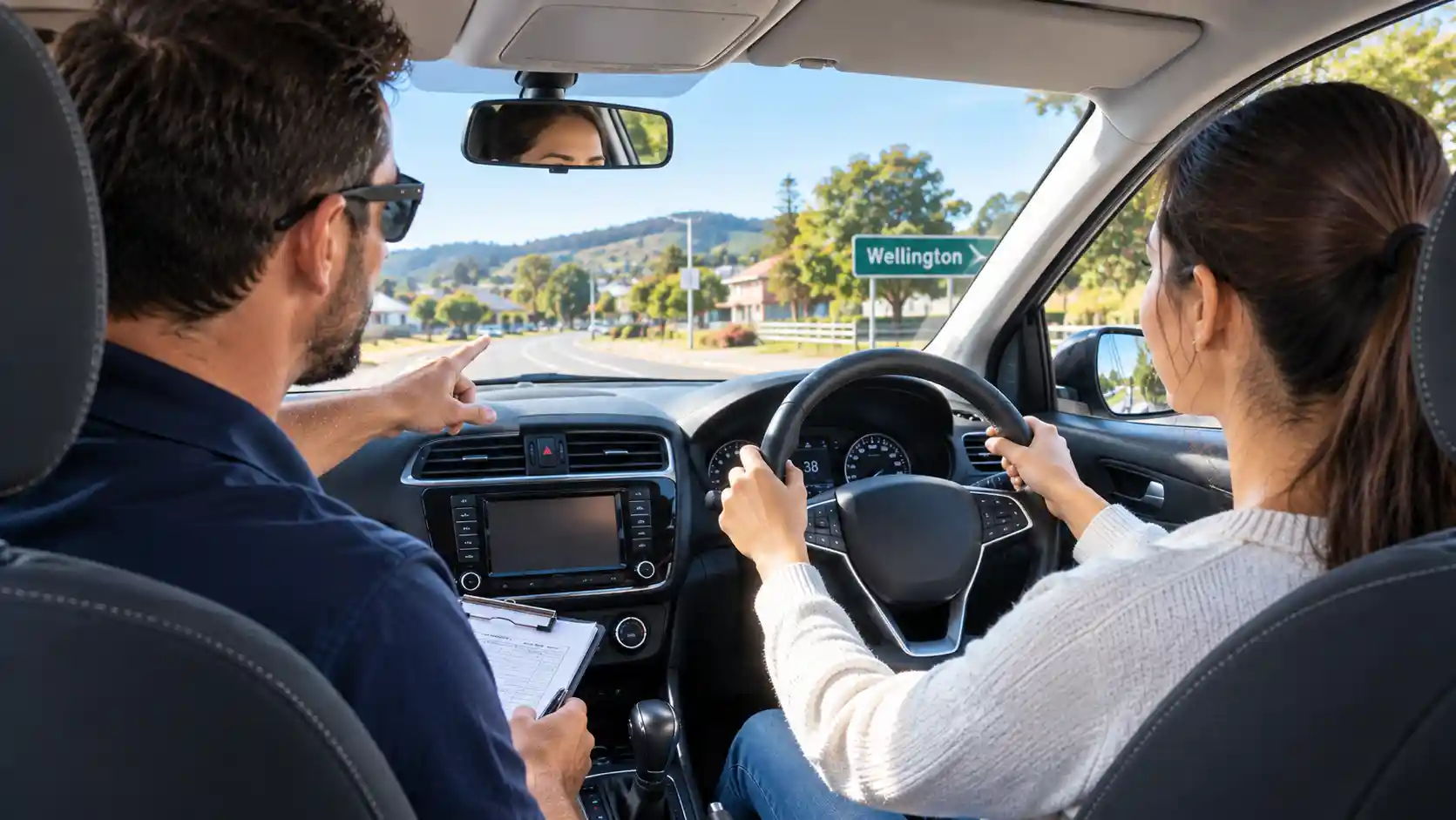
Learning to drive in Tomingley is different from learning in a busy metropolitan suburb. The roads are more open, the distances between towns are greater and the Newell Highway brings a very different mix of traffic, including heavy vehicles travelling through the region.
That does not mean you need to learn in a complicated environment. It means your lessons should reflect the driving you are actually going to do.
AUZ Driving School provides driving lessons in Tomingley for learners who want practical instruction suited to local roads, rural driving conditions and the requirements of the NSW licensing system.
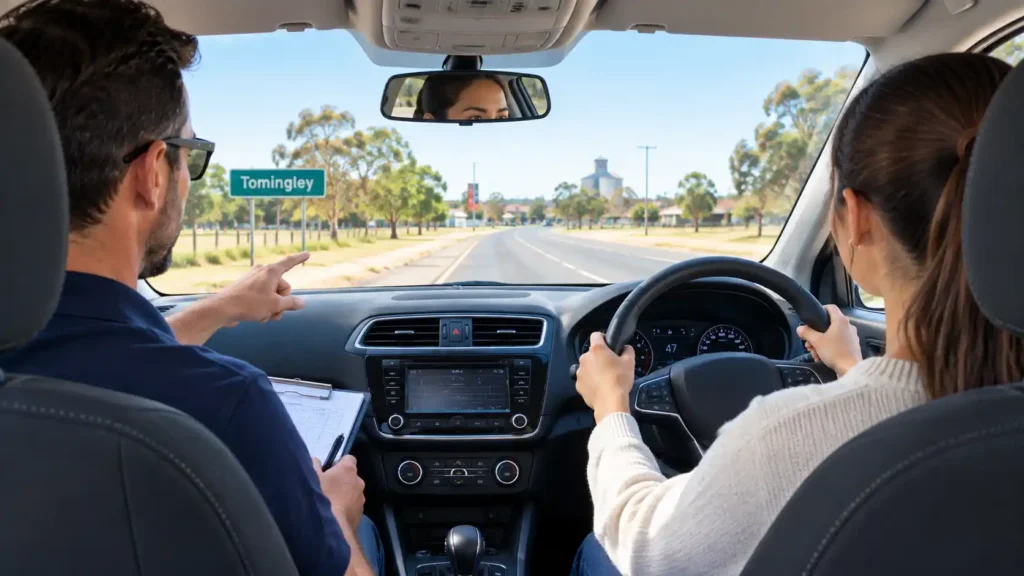
Why Local Driving Experience Matters in Tomingley
Tomingley sits on the Newell Highway in the Narromine Shire and forms an important road connection through the Central West.
For a learner, that means local driving practice needs to cover more than quiet streets.
You may need to become comfortable with:
- Open roads and longer sight distances
- Higher-speed traffic
- Heavy vehicles and road trains
- Intersections with less surrounding traffic than you would find in a city
- Rural road conditions
- Speed changes between built-up and open-road areas
- Sharing the road with vehicles travelling longer distances
- Maintaining concentration when there are fewer visual cues around you
A local lesson should therefore develop your judgement, not just your steering and pedal control.
Understanding the 90 km/h Learner Limit
NSW learner drivers cannot drive faster than 90 km/h, even when the posted speed limit for the road is higher. A lower posted limit still applies where one is displayed.
This is particularly relevant for Tomingley learners because the Newell Highway is part of the local road environment.
The important skill is learning to maintain an appropriate speed without becoming fixated on the speedometer. You should be scanning well ahead, checking signs and adjusting smoothly when the road environment changes.
Your instructor can also help you understand the difference between driving at the maximum speed permitted by your licence and driving at a speed that is appropriate for the conditions.
For the current NSW rules, the NSW Government speed limits guidance is worth checking before you begin regular road practice.
Tomingley Lessons Should Progress Beyond Quiet Streets
Quiet local roads are useful for early lessons. They give a new driver time to learn steering, braking, turning, signalling and basic vehicle control without dealing with heavy traffic straight away.
But staying on quiet streets for too long can leave a learner underprepared.
As your skills improve, lessons should introduce more demanding situations, such as:
Intersections and Give-way Decisions
You need to recognise signs, road markings and approaching traffic early enough to make a safe decision.
The goal is not simply knowing who has right of way. You also need to judge whether your intended movement can be completed safely.
Open-road Driving
Long, straight sections can feel easy, but they require sustained attention. Learners can become less alert when there are fewer changes in the environment.
Practise scanning well ahead, checking mirrors, maintaining an appropriate following distance and recognising changes in the road before they become immediate problems.
Heavy Vehicle Awareness
Sharing the Newell Highway with heavy vehicles requires patience and good space management.
A B-double or road train has different braking, acceleration and visibility characteristics from a passenger car. Do not sit unnecessarily close behind a heavy vehicle, and do not make an overtaking decision simply because you are impatient to get past.
Your instructor can explain how to position the car and manage your following distance around larger vehicles.
Rural Intersections
At rural intersections, visibility can sometimes extend much further than it does in town, but that does not mean you should rush the decision.
Approach at a speed that allows you to assess the situation properly. Look for vehicles approaching from different directions and do not assume an apparently empty road will remain empty.
Local Practice Should Include More Than the Test
A useful driving lesson in Tomingley should prepare you for driving after you get your licence, not just for the day you sit the test.
That means learning skills you will use when travelling between towns, driving on unfamiliar roads and dealing with changing traffic conditions.
The NSW Road User Handbook covers the road rules, signs, lane markings, parking, hazards and safe-driving responsibilities that learners need to understand.
Practical lessons then give you the opportunity to apply those rules behind the wheel.
This combination matters. Knowing that you must give way is different from recognising the situation early enough to slow down, observe and make the correct decision.
Build the Right Habits Before They Become Automatic
One advantage of professional instruction is having another person watching the details that can be difficult to notice yourself.
An instructor may pick up that you:
- Check mirrors too late
- Forget a blind-spot check before changing road position
- Brake harder than necessary
- Gradually increase speed on a long straight road
- Leave decisions too late at intersections
- Follow heavy vehicles too closely
- Look only at the road immediately ahead instead of scanning further
- Become tense when approaching unfamiliar situations
- Focus on controlling the car and stop noticing what other road users are doing
These habits are easier to correct when they are identified early.
They also matter beyond the driving test. A learner who develops good observation and space management from the beginning has a better foundation for independent driving.
Preparing for the NSW Driving Test from Tomingley
Tomingley learners may need to travel to a Service NSW location for their practical driving test. The current Service NSW listing confirms that the Dubbo Service Centre at 258-260 Macquarie Street provides driver testing by appointment.
That makes test preparation different from simply practising around Tomingley.
You should eventually become comfortable driving in the type of environment you will encounter at the testing location, including busier streets, more traffic, lane changes, intersections and parking situations.
The NSW driving test itself assesses driving skills, decision-making, hazard awareness and how you share the road with other road users.
The official Guide to the Driving Test explains the assessment in detail. The test is conducted over 25 zones and assesses five key performance areas: speed management, road positioning, decision making, responding to hazards and vehicle control.
For that reason, test preparation should not revolve around memorising a route.
It should make you capable of handling an unfamiliar instruction safely.
What to Look for in a Tomingley Driving Instructor
Not every driving school will be equally practical for a learner living in a small regional community.
Before booking, ask questions that relate to your actual situation.
Does the instructor teach in Tomingley?
This is the first practical question. A school may advertise service across a large area but have limited availability in smaller towns.
Can lessons start from a convenient local location?
For regional learners, unnecessary travel to meet an instructor can add considerable time and cost to regular lessons.
Does the instructor understand rural driving?
City driving experience does not automatically mean someone is familiar with the challenges of open roads, heavy vehicles and longer distances between towns.
Can lessons progress towards the practical test?
Once your basic skills are established, you should be able to work on the areas that matter for your test rather than repeating introductory exercises.
Is the instructor properly licensed?
NSW requires paid driving instructors to hold the appropriate driving instructor licence. Current Service NSW requirements include being at least 21, holding a current unrestricted Australian driver licence, having held the relevant unrestricted licence for at least three of the previous four years, meeting the relevant suitability requirements and completing the required instructor testing and training.
You can check the current requirements directly through Service NSW’s driving instructor licence information.
Your Lessons Should Change as You Improve
A first lesson and a pre-test lesson should not look the same.
Early lessons may focus on:
- Steering and vehicle control
- Starting and stopping smoothly
- Basic turns
- Signalling
- Mirror use
- Positioning on the road
Once those skills become more consistent, lessons can move towards:
- Intersections
- Give-way decisions
- Roundabouts
- Lane positioning
- Blind-spot checks
- Open-road driving
- Heavy vehicle awareness
- Parking and other manoeuvres
- Independent decision-making
- Test-style driving
This progression is more useful than treating every lesson as another version of the first.
If you already have some driving experience but have developed gaps or have not driven for a while, refresher driving lessons can be a better fit than starting with a complete beginner programme.
Tomingley Learners Can Prepare For the Test Without Learning a Memorised Route
The official driving test is designed to assess how you drive across a range of situations. The testing officer directs the drive and records your performance rather than expecting you to recite a memorised route.
That is useful for learners from smaller communities.
Instead of spending every lesson trying to predict exactly where the examiner will take you, focus on becoming comfortable with the underlying decisions.
Can you approach an unfamiliar intersection safely?
Can you recognise a change in speed limit early?
Can you maintain a safe gap behind a heavy vehicle?
Can you change lanes without rushing?
Can you respond when another driver behaves unexpectedly?
Can you follow an instruction without losing awareness of everything else happening around you?
If the answer to those questions is yes, you are preparing for the skill being assessed rather than simply preparing for one road.
Make Your Logbook Practice Work With Your Professional Lessons
Professional lessons do not replace supervised practice. They can make the practice you do with family members or other eligible supervisors more productive.
A useful approach is to take one or two skills from each lesson and deliberately practise them afterwards.
For example, if a lesson identifies late mirror checks as an issue, make mirror awareness the focus of your next supervised drive.
If speed management is the problem, practise maintaining a steady appropriate speed while regularly checking signs and the surrounding environment.
If intersections are difficult, spend part of your next session practising observation and decision-making rather than simply driving further.
NSW also provides guidance for supervisors, including advice on planning practice sessions, giving constructive feedback and helping learners develop hazard awareness.
This gives family practice a purpose instead of turning every drive into an informal test.
Getting Ready for Test Day
Before booking your practical test, make sure the administrative requirements are also in place.
If you are under 25, you generally need to have held your learner licence for at least 12 months, completed 120 hours of supervised driving including 20 hours of night driving, and passed the Hazard Perception Test. Learners aged 25 or older do not have the same 120-hour logbook requirement.
You also need a suitable, roadworthy vehicle for the test.
If you do not have access to one, AUZ Driving School provides car hire for driving tests, which can be useful for learners who have completed their preparation but do not have a suitable test vehicle available.
For learners who need extra night practice, night driving lessons can also address a specific part of the supervised driving requirement.
Driving Lessons For Tomingley Learners Who Need Flexibility
Regional learners do not always have the same access to services as people living in larger centres. Lesson timing can also be difficult when school, work or family commitments are involved.
AUZ Driving School’s weekend driving lessons provide another option for learners who cannot fit regular weekday sessions into their schedule.
For younger learners starting from scratch, teen driving lessons can provide a structured starting point.
The important consideration is not simply how many lessons you book. It is whether each lesson addresses something that will make you a safer, more capable driver.
A Local Lesson Should Prepare You For Life After the L Plates
A driving licence gives you considerably more freedom in a regional area, but it also means taking responsibility for longer trips, changing road conditions and sharing the road with a wide range of vehicles.
That is why learning in Tomingley should not be reduced to passing a test.
You need to understand how your vehicle behaves on open roads, how to manage space around heavy vehicles, how to recognise hazards early and how to make decisions when there is no one beside you telling you what to do.
AUZ Driving School provides driving lessons in Tomingley for learners who want to build those skills locally and progress towards their NSW driving test.
For the latest road rules and learner requirements, check the NSW Road User Handbook and the current NSW driving test information before booking your test.